A young medical officer’s experiences
fra Hamro Patrika nr. 2, 2020
Tekst og foto: Prativa Subedi, Rolpa District Hospital
Situated at a distance of around 480 km west of the capital city of Nepal, Rolpa is a remote hilly district popularly known for being the epicenter of Maoist insurgency during the armed conflict. Over the years, it has been struggling for economic growth and development of infrastructure. With sturdy steps to boost the health sector, easy and equitable access to basic health care services has definitely improved, but still remains an ambitious goal. Born and brought up in Nepal’s capital, little had I witnessed the health related suffering in rural areas. I knew that I could never understand and embrace the actual health system in Nepal if I remained confined in the city. As someone who believed that it is the mixture of empathy and expertise that makes a good physician, I always wanted to have the experience of working in a rural setting. This led me to choose to work in the district hospital of Rolpa during my scholarship bond period. I have been here three months, and I can say that working in a resource poor setting is both daunting and rewarding.
The difficult topography of the district poses a major hurdle for people in getting access to health care services. As this is the only district level hospital in Rolpa, several patients come to the out patient department after walking for hours. Moreover, the stop in public transportation owing to the Covid-19 pandemic has further added to their suffering. “I left home at dawn, and reached here by dusk”, a middle-aged women told me in the emergency last week. When a patient comes to us after so much toil, we feel a sense of responsibility and desire to be able to heal all their ailments. But then, there are various constrains on our part. We often lack the diagnostic equipment, and sometimes the required medicines are not available. Lack of critical care set up is a major drawback. For instance, we can only provide the basic resuscitation, and then have to refer them to an equipped center. It is really heart wrenching when you know that a life could be saved with your own knowledge and expertise but owing to the lack of infrastructure, you have to stay blindfolded and pray for his/her well being till they reach the right place.
It is not always about infrastructure and equipment; sometimes the treatment simply is beyond our expertise. As mere medical officers, we are not skilled and trained in everything. How we wish we could have at least one family physician with a post-graduate degree so that we could even provide specialized services to the patients under his/her guidance. The government should provide better facilities and fertile ground for professional growth of the post graduate doctors in order to motivate them to work in rural areas. When patients are critically ill, some of them die at our hospital or during the transport. It is so painful that we can just do the primary management. Our biggest challenge is deliveries, particularly complicated ones with cesarean sections. Fortunately, the maternal and neonatal outcomes have been good in most of the cases. But it is definitely not an easy task to perform cesarean section at a place that lacks a blood bank and an intensive care unit. In some deliveries where the mother had massive bleeding, the surgeon himself donated blood to the mother. In cases where the baby cannot breathe properly after delivery, the baby has to be referred after initial resuscitation. You should know that the quickest possibility to reach a tertiary centre with such facility is six hours by jeep. It is less likely that the baby survives after this delay, but we are forced to take the chance. Sometimes, we have to accept that the baby dies at the hospital. People outpour their wrath upon the health workers after having lost the beautiful soul they had been anticipating during nine months. We understand them being overwhelmed by emotions rather than conscience, so the best we can do is to counsel about the situation.
Working in a rural setting is like gambling, you may win or lose but you should dare to play. I have an immense respect for all the physicians who have been serving here since long amidst all these challenges. Despite the odds, working in the periphery is very rewarding because every ounce of your hard work gets appreciated. The innocent countrymen are way too humble, and they respect your profession and the service you offer them. When critically ill patients get better and discharged, they express immense gratitude because they know that they would have to pay thousands of rupees and suffer much hardship if they had to keep lingering in search of a tertiary care. That pure smile of gratitude in your patients’ face is enough to give you a sense of contentment that outweighs the deprivation of luxury you would have had residing in the city.
Also, you develop a different kind of bond with the patients here. Unlike in the city where patients have multiple options to choose for their illness, people don’t have the privilege to choose because health facilities are limited. As the only district hospital, this is the hub for most of the patients in Rolpa. Having seen the same patient over and again during the follow up, you almost know the history of the patient by the face and sometimes even their personal stories. Your choice of treatment is not just based on what the report says or what his/her condition looks like, it also revolves around their socioeconomic background, for instance, having to travel for five hours from his/her home to my facility. As most of the patients coming for care cannot afford expensive treatment, I tend to prescribe medicines that are listed as essential drugs and provided free by the government. Working in a rural area makes you more of a holistic doctor where you develop intimate connection with patients. And just like you remember their story, the patients will remember you. Maybe you will meet them at the local shop or at the bus station, and they will greet you with much love and respect.
Also, you develop great leadership and decision-making skills while working in a rural area. If I had been working in tertiary hospitals in Kathmandu, I would have learned much from the guidance of my respected seniors and learned to manage myriad of cases, including the most rare. But then I would not have been independent and would not have developed my own ability to make clinical judgments. It is easy to work having abundance, real efficiency lies in giving your best with scarcities.
Learning to provide the best service in a resource poor setting eventually teaches us to make the best out of the adversities in life. The novel Corona-19 virus pandemic has startled the entire world, and Rolpa district remains no exception. With many Rolpali men and women working in India to make their living, the district had 7000 people in quarantine during the early phase of the lockdown, which is the highest in the Province. In a place where large families shelter in small houses the concept of home isolation is not possible. Hence, a district level isolation center was established under the initiation of the Rolpa district hospital, the one I am working in.
Livelihood has been affected not just because of the direct effect of the virus, but also because of the economic downfall it has caused. Those who had to work for everyday living, and had only little savings for themselves, are already having a tough time. The number of covid-infected cases has been rising exponentially in the country. The government’s new guidelines have limited the testing criteria, and, therefore, there have been very few tests during the recent days. So, there is no doubt that the reported numbers are far less than what they actually are. Health workers remain at a high risk, battling with the contagion with ill protection. Considering the literacy level of the people, their concern and conscience towards the pandemic can be considered satisfactory. Almost every patient or visitor who comes to the hospital comes wearing a mask. A trivial thing it may be, but it has to be appreciated. But what really needs to improve is the stigmatization towards suspected or positive cases and towards health workers. Covid-19 positive cases are treated as different entities and people tend to keep not just physical distancing, but also emotional distancing. Likewise, people are hesitant to rent homes to health workers, considering them a potential source of infection. But the fact is that we can never win this battle alone – we need to stand together and fight together.
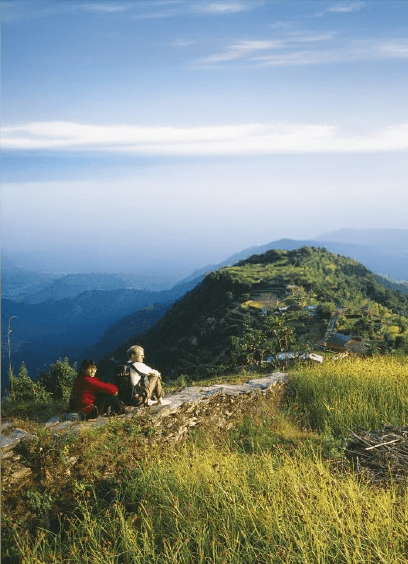
So far, my three months stay here has been amazing. For those who have not been to Rolpa, their sole impression of this place is a war and turmoil hit district. Little do they know about the serenity of nature, the pleasant climate, and cultural richness. You will never regret visiting this place. Personally, Rolpa has given me a space to learn and grow, and a sense of contentment to the profession I have chosen. The Rolpali people are amongst the most compassionate and welcoming people I have known so far. Working as a doctor, more so in a rural area, is definitely not easy, but when people are as warm hearted as the Rolpali, you are filled with motivation to make a change in their lives. All I wish is to serve and give back to these people in every way I can.
Les hele utgaven av Hamro Patrika her: https://norge-nepal.no/wp-content/uploads/2020/11/hp-september-2020.pdf