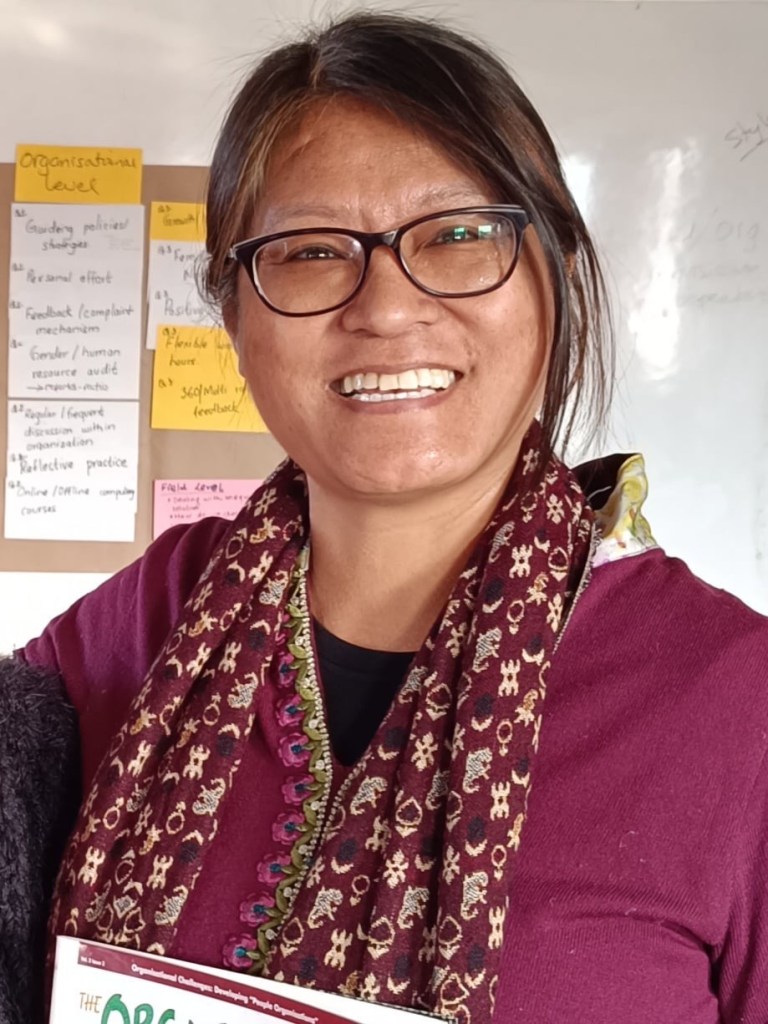
10 av 40: Basudha Ghothane

Basudha Gurung, frilanskonsulent – kapasitetsutvikling og prosjektledelse
On the occasion of the Norway-Nepal Association’s 40th anniversary, we will publish interviews with people who have a relationship with the association. Follow along and get to know the association better!

Basudha Gurung kom til Norge som ungdom og flyttet tilbake til Nepal for 28 år siden. Hun tok sin master grad i Økonomi og Ressursforvaltning ved Norges Miljø- og Biovitenskapelig Universitet (NMBU) på Ås. Basudha er en frilanskonsulent og jobber med kapasitetsutvikling og prosjektsledelse med bistandsorganisasjoner i Nepal og andre land. I fritiden reiser hun ofte til landsbyen Tamagi, ikke langt fra turistbyen Pokhara der familien kommer fra, for rekreasjon samt inspirasjon.

Har du et favorittminne knyttet til Norge-Nepalforeningen? Minne som berørte deg eller hadde en innvirkning ?
Jeg har flere gode minner, jeg. Vi pleide å ha stort oppmøte på det årlige «dal-bhat» møtet. Alle så frem til en annerledes smaksopplevelse med nepalesisk mat og satte veldig stor pris på å møte andre Nepal-interesserte og sosialisere med hverandre. Jeg husker at det kunne være ganske utfordrende som styremedlem å finne folk til å presentere ulike temaer, men vi hadde mange fine forelesninger med ganske bra oppmøte, og noen ganger var det litt stusselig med veldig få som møtte opp.

Hvordan kom du inn i foreningen og hva er din tilknytning til Nepal?
Det var gjennom min far, Hem Bahadur Gurung og han var veldig aktiv i Norge-Nepalforeningen. Det var en del som ønsket å samle folk i Norge som hadde vært i Nepal, enten i jobbsammenheng eller på korte besøk, for å høre om deres erfaringer og få informasjon om Nepal. Søsteren min, Anuradha Gurung Amundsgård og jeg ble selvsagt med på NNF-møter og vi har begge vært med i styret i hver vår periode. I de første årene etter at jeg kom tilbake til Nepal fikk jeg tilsendt Hamro Patrika i trykt form og senere kom det i digital form, sendt via epost. Jeg husker at Kirsten Greiner, senere styreleder i NNF, var veldig flink med Hamro Patrika. Da Aina Grødal ble styreleder, oppfordret hun meg til å følge med på den nystartede NNF Facebook-gruppe. Det er gjennom NNF FB-konto at jeg får vite om foreningens aktiviteter.

Hvilken visjon bør NNF ha for de neste 40 årene?
Jeg regner med at NNF vil fortsette å fungere som en plattform for folk som er interesserte i  Nepal, og dele erfaringer, samt fremme ideer om utveksling av kultur og sosiale temaer. Det er nå enkelt å hente informasjon om Nepal, gjerne fra «social media». NNF kan jo øke sin «digital outreach» til flere andre, men må konkurrere for å tiltrekke seg særlig Nepal-interesserte folk for fysisk oppmøte. Det er jo flere nepalesere i Norge i dag, og samtidig flere nordmenn som reiser til Nepal, enten på jobb eller på tur, dermed flere muligheter for kunnskapsutveksling og samarbeid i forskjellige områder. Det fins mange i Norge med rik kunnskap og erfaring fra eller om Nepal, f.eks. de som har arbeidet med frivillige og humanitære organisasjoner eller gjennom utenrikssamarbeidet, med stor påvirkningskapasitet, både i Nepal og her i Norge om «fremtidens» sosiale og kulturelle saker og ideer om mulig utveksling som kan gavne begge parter. Det er jo interessant å tenke hvordan ungdom med nepali-bakgrunn utvikler seg i Norge! Vil disse andre generasjons innvandrere fra Nepal savne eller søke sine røtter? Hvilke dilemmaer har de opplevd eller vil oppleve med å tilpasse seg for å «bli norsk»? Jeg vil gjerne gratulere NNF med 40 års jubilium og ønske lykke til med a fortsette som en aktiv plattform for sosial, kulturelle og annet utveksling mellom Nepal interesserte folk i Norge.
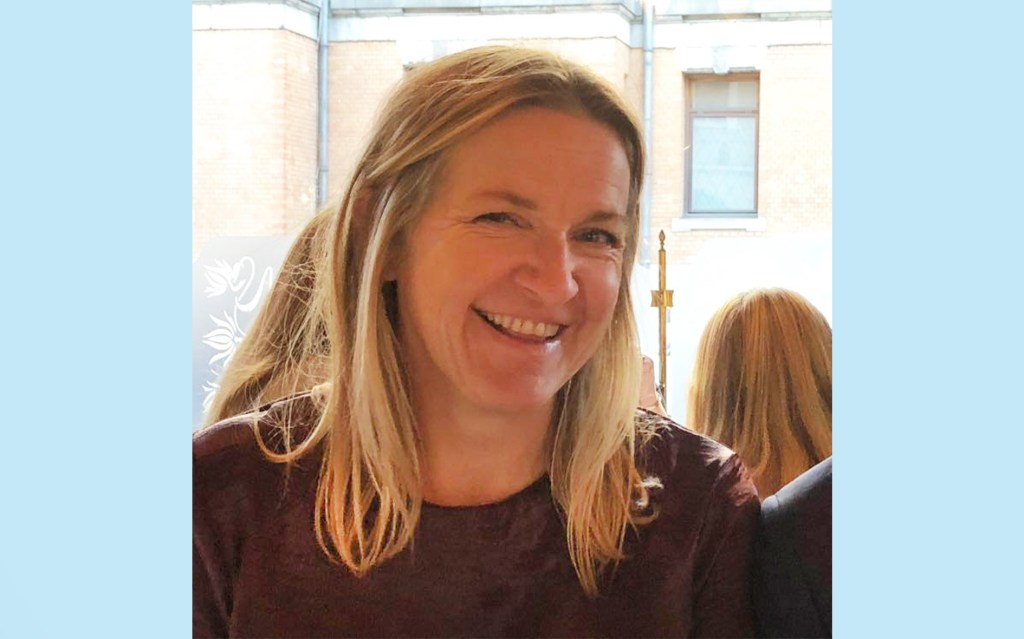
9 av 40: Heidi Fjeld

Professor i medisinsk antropologi ved Universitet i Oslo

On the occasion of the Norway-Nepal Association’s 40th anniversary, we will publish interviews with people who have a relationship with the association. Follow along and get to know the association better!

Har du et favorittminne knyttet til Norge-Nepalforeningen? Minne som berørte deg eller hadde en innvirkning ?
Jeg har to spesielt gode minner fra foreningsarbeidet: En dag på Stovner hvor vi hadde språkundervisning først og momo-laging etterpå, og en Nepaldag på Vippa med nydelig musikk og mat og masse folk!

Hvordan kom du inn i foreningen og hva er din tilknytning til Nepal?
Jeg jobber på Universitet i Oslo og hørte om foreningen fra Astrid Hovden, en kollega med forskningsfelt i høyfjellsamfunn i Nepal. Mitt arbeid hadde tidligere vært i Tibet og i den forbindelse hadde jeg vært mange ganger i Nepal, men mest på gjennomreise. Da jeg i 2016 begynte et prosjekt i Mugu, helt vest i landet, ble jeg med Astrid til foreningen og ble etterhvert rekruttert inn i styret.

    Hvilken visjon bør NNF ha for de neste 40 årene?
    Jeg synes en god visjon kan være å opprettholde en offentlig interesse i Nepal og være et samlingspunkt for oss som er interessert i landet.

    8 av 40: Marit Bakke

    On the occasion of the Norway-Nepal Association’s 40th anniversary, we will publish interviews with people who have a relationship with the association. Follow along and get to know the association better!

    How did you get into the association and what is your connection with NNF?
    I have been a member of Norge-Nepalforeningen (NNF) since 1992. The meetings have always been good occasions for Norwegians and Nepalis to meet and exchange information and experiences. For several years, the annual meeting with daal bhat was joyful. It is impressive that our small association has organized several significant events: the seminar (theme: aid that works) and dinner to celebrate NNF’s 25th Anniversary in 2009, the exhibition Royal Luxury and Tiger Hunting in 2013 with photos from the Chitrakar collection, and a seminar in 2014 on democracy in Nepal. Thanks to support from the NNF’s board and funding from the Norwegian Embassy in Nepal, I very much enjoyed writing the book Adventures in Nepal, with Olav Myrholt as co-author. We both were happy to collaborate with Nepalis who made it possible to publish the book in 2016.

    Between 2006 and 2014 I was the editor of Hamro Patrika. This required a constant eye on events related to Nepal, and to look for contributors to the newsletter. I am grateful that these years kept me more than ever updated on conditions in Nepal, and that they also brought me in touch with persons with an interesting story to tell.

    Do you have a favourite memory associated with Norge-Nepalforeningen (NNF) or a memory that touched you (had an impact)?
    There are so many memories from trips to Nepal and meetings with Nepalis. My first physical experience happened in 1984; at our camp site at 3.200 meters (Pisang on the Annapurna Trail) I bended my head back to watch 5.000 meters up to the top of Annapurna peaks at more than 8.000 meters – how small human beings are in nature. Other wonderful experiences from mountains in Nepal followed later. You learn much about a country by reading books and articles, but you need people to understand. During treks I saw villagers working in the fields and fetching water from the village faucet, I saw women weaving or children playing. Everyday life so different from my own! Since 1999, I have been fortunate to spend time together with Nepalis, professionally and socially, many of whom have become good friends. The 2015 earthquake in Nepal shocked people also in Norway. One of the many events to commemorate the victims took place on May 10 that year before a concert in Nationaltheatret in Oslo. People had gathered in front of the theater, with balloons in their hands. After brief talks by Nepalis and Norwegians, the white balloons flew up in the air – in Nepal, white symbolizes grief (read more about this and other events in Hamro Patrika no. 2, 2015).

    Another memorable event was when Kesha Kumari Damini, on May 15, 2014, received the Business for Peace Award in Oslo. Almost illiterate, there she was on the podium, together with Sir Richard Branson and other dignitaries, to receive the award for great leadership in mobilizing women in the Parbat district to become independent and to be able to start their own businesses (read more about Kesha Kumari Damini in Hamro Patrika no. 3, 2014: 7–9).

    What would your vision be for NNF for the next 40 years?
    Norge-Nepalforeningen must focus on opportunities for people to meet. Its website and Facebook are both excellent tools to get facts and information, but I am convinced that personal contact still is the best way to understand conditions in our two countries – and that this will be the case also in the future. Meetings, seminars, and particularly the regular get-together evenings at restaurants, are all good social occasions. Finally, but not least – may Hamro Patrika be published also in the next 40 years, with in depth articles about affairs in Nepal and about Norway-Nepal relationships.

    7 av 40: Suraj Thapa

    Professor – UiO, Former President-NRNA

    On the occasion of the Norway-Nepal Association’s 40th anniversary, we will publish interviews with people who have a relationship with the association. Follow along and get to know the association better!

    How did you get into the association and what is your connection with NNF?
    My first contact was through a Nepali lady who has perhaps lived in Norway the longest time among the Nepalese. Later I was in very close contact with NNF and the leaders especially when Marit led NNF and I was leading NRNA (Non Residential Nepali Association). So, it’s been a journey of connections and collaborations, all thanks to these bonds formed over time.

    Do you have a favourite memory associated with Norge-Nepalforeningen (NNF) or a memory that touched you (had an impact)?
    One of the eventful memories that really stand out for me is when we had a renowned Nepali journalist spoke at a Norge-Nepalforeningen event during a particularly turbulent time in Nepal’s political landscape. Their insights were eye-opening and sparked intense discussions among attendees. Plus, the atmosphere was enriched by enjoying delicious Nepali Dal Bhat and watching traditional Nepali dances. It wasn’t just about the food and entertainment though; it was about the connections formed and the potential collaborations discussed between NNF and NRNA Norway. It was a moment where I truly felt the power of community and cross-cultural exchange.

    What would your vision be for NNF for the next 40 years?
    Over the next 40 years, my vision for NNF would be to really strengthen the bond between Nepal and Norway in meaningful ways. Let’s bring experts from both countries together more often for talks and discussions on important issues. We could also do more to showcase Nepalese culture in Norway, spreading awareness and appreciation. Another big goal would be boosting tourism in Nepal, sharing its beauty with even more people around the world. And of course, let’s keep pushing for better health and education support in Nepal by staying in close contact with the government and other organisations. It’s all about building bridges and making positive changes for both nations.